
Glascock County Bench Warrants Explained
A bench warrant is court process tied to a case that already exists. Georgia municipal-court material warns that failure to appear can bring a bench warrant and possible arrest. In Glascock County, the Magistrate and Probate office handles criminal matters and misdemeanor traffic citations, so a missed setting in one of those matters usually lands at that clerk's counter. Superior Court matters stay on the Superior Court docket. What actually triggered the process, though, comes only from the record. The cause could be a missed date, contempt, an unpaid obligation, or some other court order left unmet. A late payment alone does not always produce the same result. Read the notice, the docket, and the judge's order before assuming anything. The bare word warrant on a paper tells you nothing about current status in Glascock County.
Glascock Bench Questions Start With Clerks
The issuing clerk holds the case file behind a possible Glascock County bench warrant. Call the Magistrate and Probate Court office at 706-598-3241 about its docket. For a Superior Court case, the Superior Court Clerk at 706-598-2084 keeps the criminal filings and orders.
Magistrate and Probate Clerk
Kristin Daniel
706-598-3241
Traffic and local criminal-process routing
Superior Court Clerk
Kristie D. Stephens
706-598-2084
Superior and Juvenile record routing
Glascock County Sheriff
Official Sheriff page
706-598-2881
24/7 directory: 706-595-2145
When you call, give the clerk the full name, date of birth, case or citation number if known, and the court named on any paper. Juvenile matters are not a public lookup route in Glascock County. A parent or guardian should follow the court's access process instead.
How Glascock County Bench Warrants Are Issued
The judge creates bench process after a court duty goes unmet and the law and record permit that response. The clerk then records the order and the next docket event. The Glascock County Sheriff may receive the data needed to serve or execute the warrant. These roles connect, but they are not interchangeable. A bench warrant can stay open until the court recalls or quashes it, the person appears, or another lawful disposition is entered. Recall means the court withdraws the process. Quash means the court sets it aside entirely. A receipt or an oral promise does not prove the records have updated, so ask for an entered order or clerk confirmation, then ask when Sheriff records should reflect it. Georgia materials use capias in some criminal settings, and Glascock County uses no separate verified capias label for ordinary failure-to-appear matters. Repeat the exact term on your document rather than treating capias, citation, bench warrant, and arrest warrant as synonyms.
Glascock FTA and DDS Records Differ
A traffic failure to appear can create more than one record path. The court controls its case and any bench warrant that issued from it. Georgia's Department of Driver Services may act on driving privileges after court notice. Paying a DDS reinstatement amount does not prove the Glascock County court recalled a warrant. A court order, in turn, does not prove DDS has processed a release.
- FTA
- Failure to appear or respond, as the court uses that term.
- Recall
- A court order withdrawing its process.
- DDS hold
- A separate driver-privilege action after court notice.
- Served
- An agency record that process was executed.
Start by identifying the court on the citation. Ask what happened on the missed date and whether process issued, then request proof of disposition. Use the official DDS route only if the court says a license step applies. Note: A no-result vendor search cannot certify that Glascock County bench warrant records are absent or resolved.
Bench and Arrest Warrants Compared
Both warrant types can lead to custody. Their sources differ, though. A bench warrant usually grows from a missed step in a case already before a court, while an arrest warrant rests on an alleged offense and probable-cause process. Agency data can blur the labels, so confirm with the issuing clerk in Glascock County.
| Feature | Bench Warrant | Arrest Warrant |
|---|---|---|
| Usual trigger | Missed date or noncompliance | Probable cause for alleged offense |
| Source | Judge in pending case | Judge or magistrate reviews support |
| Key record | Docket and missed event | Warrant, charge, and return |
| Next question | Reset, recall, appearance, bond | Appearance, custody, bond, hearing |
The companion Glascock County arrest warrant search covers the probable-cause side. Neither label settles anything. Only current official records establish whether process is open.
Glascock History Tools Are Not Warrant Lists
The Georgia Bureau of Investigation describes criminal-history services, but that product is not a live Glascock County bench warrant search. Its scope differs from a court docket or the Sheriff's file. The Georgia Crime Information Center is a law-enforcement network, not a public statewide warrant list. The official GBI criminal-history explanation shows where that boundary falls:
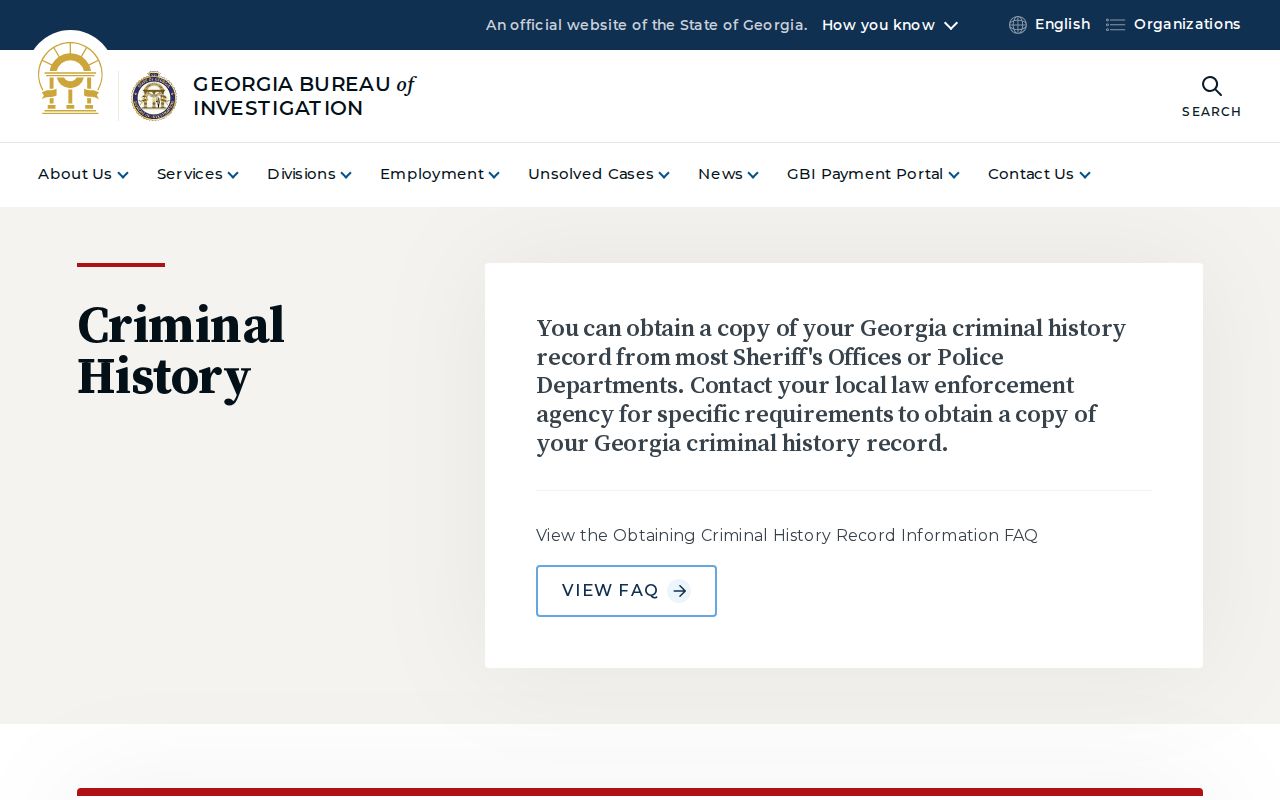
That page identifies the history product, but live Glascock County bench warrant status still calls for the Sheriff and the court. The GCIC overview documents the state network:
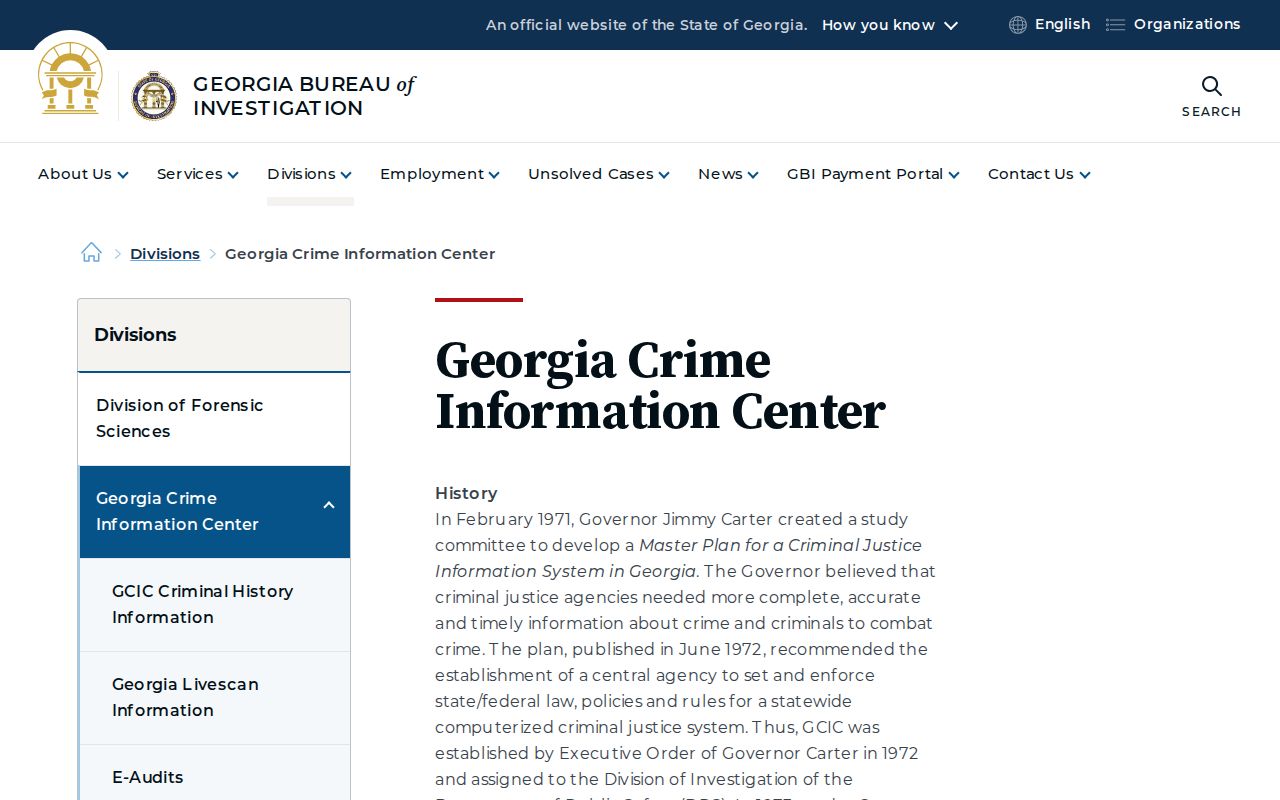
That interface does not expose restricted justice data as an online county roster.
Resolving a Glascock County Bench Warrant
Resolution starts with the court that issued the process. Do not rely on an old image, a caller demanding instant payment, or a DDS result. A lawyer can tell you whether a filing, reset, recall request, or planned appearance fits your Glascock County case, and whether an inquiry could lead to custody.
- Confirm the county, issuing court, process type, and case or citation number.
- Ask what event was missed and whether counsel may file or appear.
- Confirm bond, location, identification, payment form, and custody risk before travel.
- Complete the court-directed step and obtain a receipt, reset notice, or recall order.
- Recheck with the clerk and Glascock County Sheriff after the stated update time.
Caution: Do not ignore possible bench process or appear before asking about custody, bond, location, and lawful counsel options.
Glascock Custody May Route to Thomson
Glascock County's adopted plan puts its prisoners in Thomson, since the local law-enforcement building has no holding cells. So call ahead before you drive. Ask the Sheriff where a person gets processed. Ask where a Glascock County bond starts too. The McDuffie jail sits next door and its page lists cash, property, and bondsman options for that facility. Those are not automatic Glascock County bench warrant rules. A fee quoted for a McDuffie County bond proves nothing about a Glascock County fee. Confirm the origin county, the facility, the hours, ID, payment form, and how you get a receipt. Plan transport and family needs before any voluntary appearance on a warrant. If a suspended license might be part of it, do not assume driving there is lawful. Counsel or the official office can spell out the lawful route.
Finding the Court That Issued the Warrant
A Glascock County bench warrant belongs to the court whose judge signed it. The Sheriff can confirm agency status, nothing more. Only that court's order controls. Start with whatever paper you have: the citation, summons, docket notice, or anything else bearing a name. No paper in hand? Then ask which court or agency sits behind the possible entry. Locally, the combined Magistrate and Probate office is the documented limited-jurisdiction route. Glascock County Superior Court, part of the six-county Toombs Judicial Circuit, carries the broad criminal jurisdiction. Georgia also recognizes municipal courts, though Gibson, Mitchell, and Edge Hill post no official warrant portal. A city name alone does not identify the court. Have the clerk repeat the court, the case number, the next event, and the exact process label. The District Attorney joins after prosecution begins, but serves as no warrant-search desk.
Glascock Bench Records and Public Access
The Georgia Open Records Act sets a broad public-records baseline. Still, rules covering active investigations, prosecution, sources, victims, juveniles, sealed records, and personal data can restrict warrant material. A direct self-check often beats a formal request. What the person needs is present status and court steps. The Attorney General's Open Government FAQ spells out how agencies must respond.
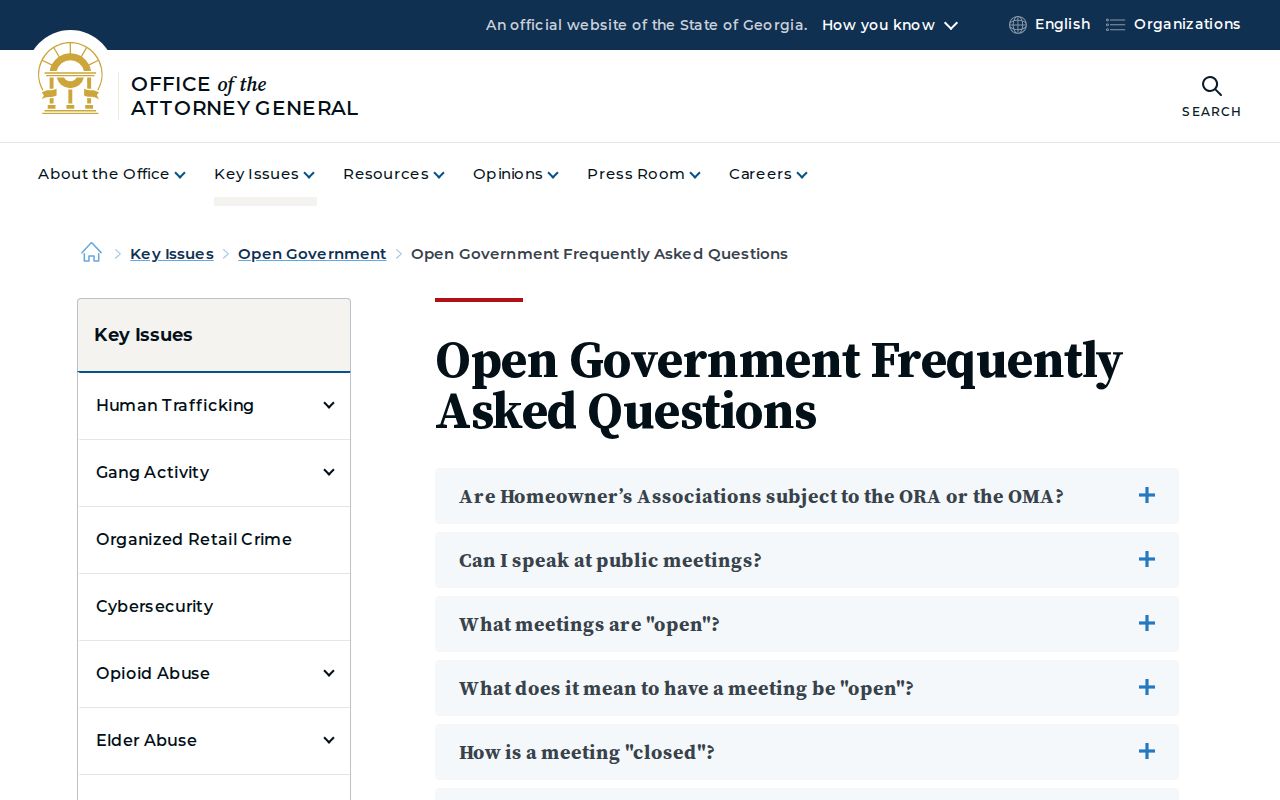
State guidance backs a focused request: an existing policy, a blank form, field definitions, or a nonexempt record. Ask for the estimate, the timing, and the legal basis for any withheld part. An office need not build a new report. A response is not a live clearance certificate. Keep every order and receipt in Glascock County, and after resolution ask when each system updates and whether a separate record-restriction process applies.